
Climate action, the Namibian way.
Namibia’s extraordinary natural environment is at the heart of its tourism industry. But the landscapes, wildlife and communities that make Namibia a destination are increasingly exposed to the effects of a changing climate.
Namibia is already one of the world’s most climate-vulnerable countries, despite contributing a negligible share of global greenhouse gas emissions. Droughts, changing rainfall patterns and water scarcity are placing increasing pressure on ecosystems, biodiversity and rural livelihoods. These pressures can also intensify conflict between people and wildlife. And because tourism takes place within the same landscapes and communities, it is directly affected by what happens to them.
"What if tourism could do more than bring people to Namibia’s extraordinary places? What if it could help those places, and the people who call them home, thrive for generations to come?"

Shifting our focus beyond carbon
Many climate responses around the world start with carbon.
ReGen starts with what is happening in Namibia.
Rather than taking emissions as a starting point and building a model around compensations, meaningful climate action starts with looking at where climate pressures are being felt most and investing in solutions that respond to real conditions on the ground.
The most immediate challenges are also about whether communities can access reliable water and food, whether landscapes can remain productive, whether biodiversity can withstand increasing pressure, and whether people and wildlife can continue to coexist.
ReGen is about climate resilience, supporting the people, nature and wildlife that make Namibia a destination, to adapt and thrive.
Carbon absorption then becomes one of the positive outcomes of ReGen, as healthier soils, restored vegetation and resilient ecosystems automatically create the conditions for greater carbon storage over time.
Tourism pioneering a new model for climate action
Tourism depends on the very places and people facing these pressures. So what if tourism could become more than a beneficiary of resilient landscapes and thriving communities?
What if tourism could continuously invest in Namibia’s future — and in its own future?
Through ReGen, pioneering tourism businesses build and finance a new mechanism for climate action in Namibia.
They are coming together with communities, conservation partners, storytellers and other experts to build a new model for climate action in Namibia, helping shape the mechanism that will allow tourism to invest in resilience over the long term.
Their contributions are already supporting pilot initiatives on the ground. But ReGen is about more than funding projects. These initiatives generate the learning needed to understand what resilience really costs, what approaches work, how impact can be demonstrated, and how tourism contributions can become practical, transparent and scalable.
This is not a finished programme being rolled out across Namibia.
We are building it together, by doing.
Pioneer Companies

Become part of something bigger
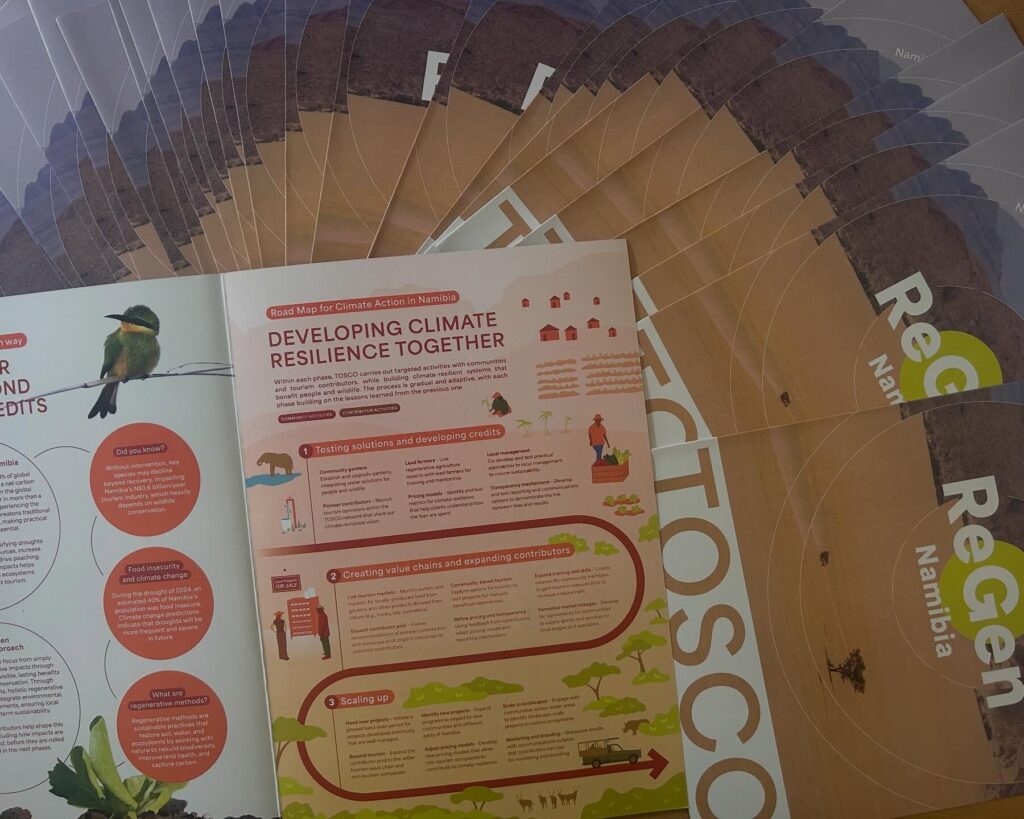
Read the ReGen Concept Note • Download the ReGen Digital Brochure
ReGen Projects
ReGen cannot address every aspect of climate resilience at once. In the first phase, we focus on the foundations of resilience: rural food and water security. Without these foundations, pressure on natural resources and ecosystems remains high.
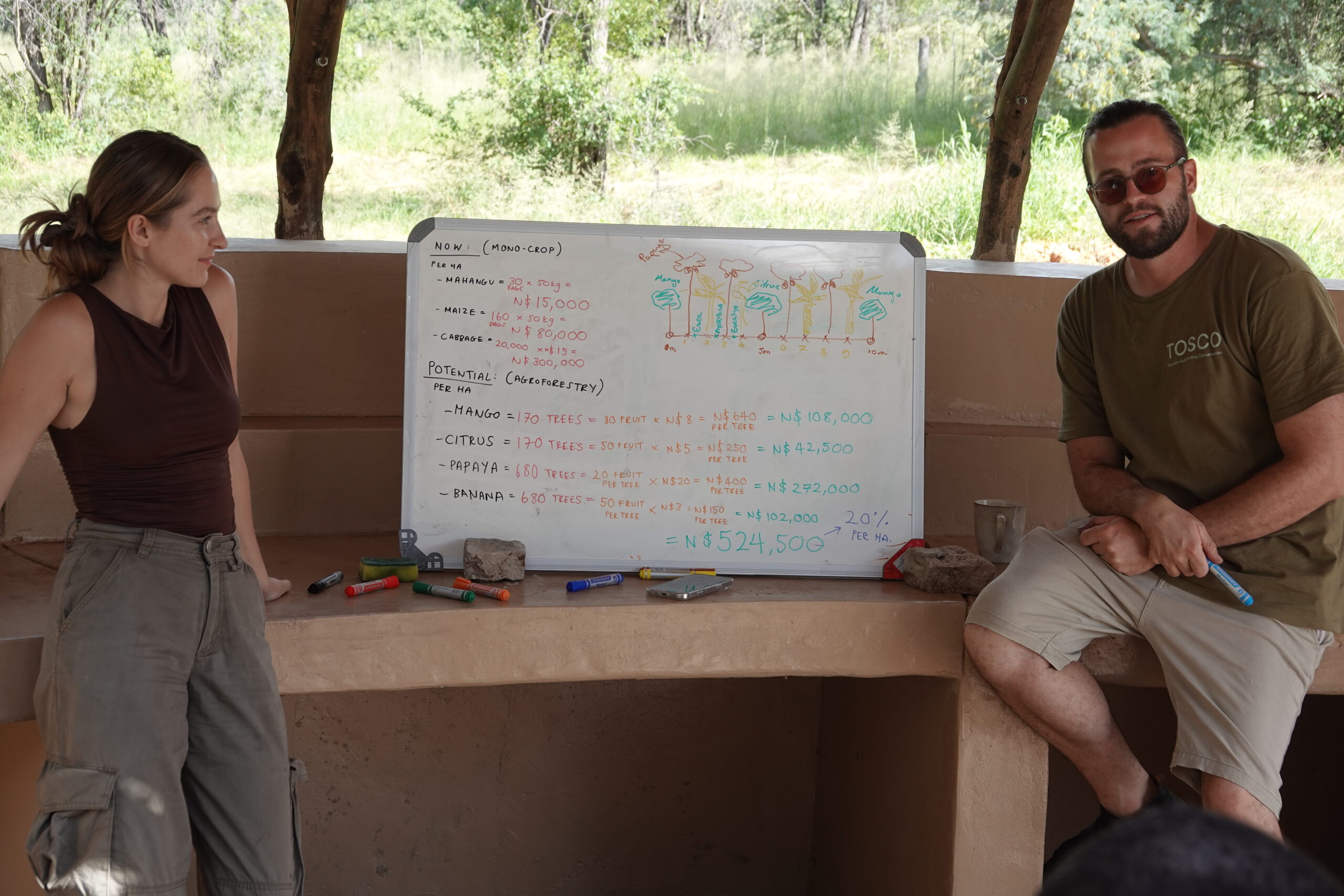
Agroforestry gardens are at the centre of our approach — a form of agriculture that works with natural processes to improve soil health, retain water, support biodiversity and create more resilient livelihoods.
But a productive garden needs more than good agricultural practices. It needs reliable water, appropriate management and the right knowledge and skills. In areas where wildlife and people share the landscape, it also needs practical ways to coexist. And for production to become a sustainable livelihood, it needs access to markets.
These connections are at the heart of ReGen’s approach. Phase 1 puts this into practice through a small number of pilot initiatives in different parts of Namibia, allowing us to learn what works in different contexts and what can be taken forward.
Food security
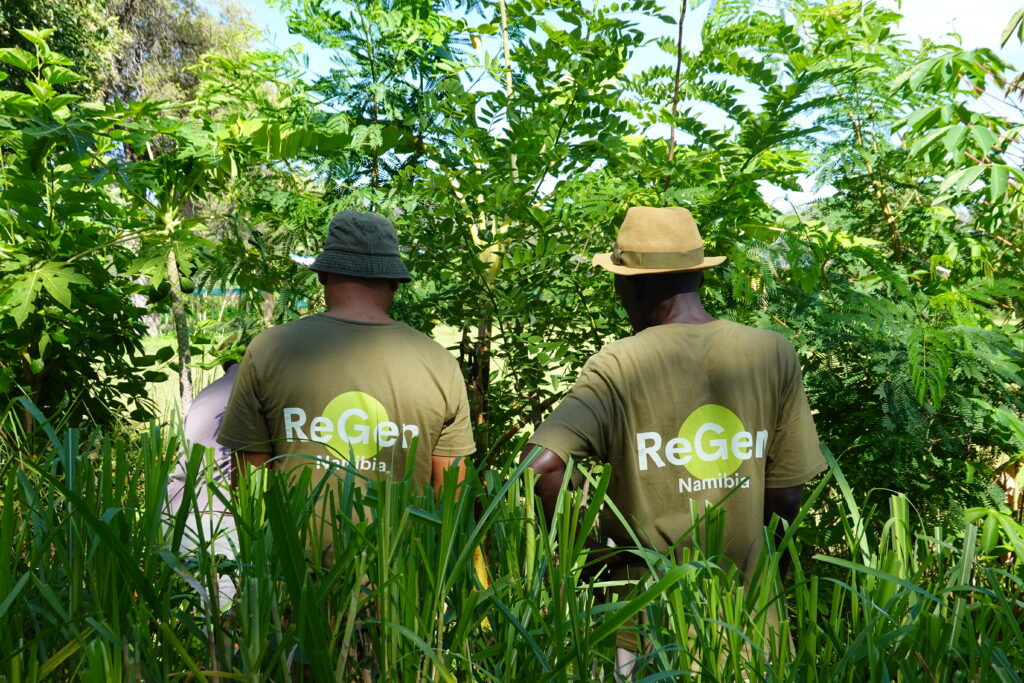
Food security is a foundation of ReGen’s first phase. We focus on regenerative agriculture: farming approaches that restore soil health, water retention and biodiversity while supporting long-term productivity, nutrition and livelihoods. These include agroforestry, organic farming, permaculture and other practices suited to local conditions.
Capacity building is central to this work. Through training and hands-on support, ReGen is investing in lead farmers who apply these practices on their own land and share their experience with others. As their results become visible, lead farmers can inspire and support more farmers in their own communities and the wider surrounding area, allowing the initiative to grow from within.
ReGen is testing different approaches in different community contexts, working with partners who can support their implementation, and building the knowledge needed to expand them over time.
Water security
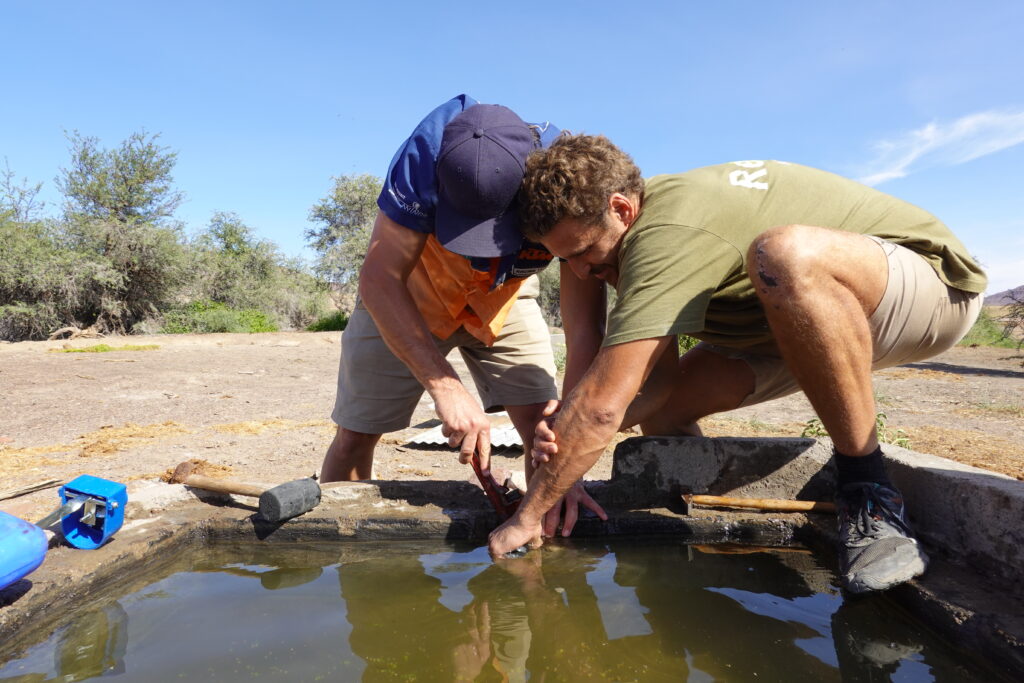
Without reliable water, resilient food systems cannot succeed.
ReGen is therefore testing practical water solutions alongside the gardens — exploring approaches such as water storage, solar-powered pumping and efficient irrigation, and learning which solutions work best in different environments.
Human–wildlife coexistence
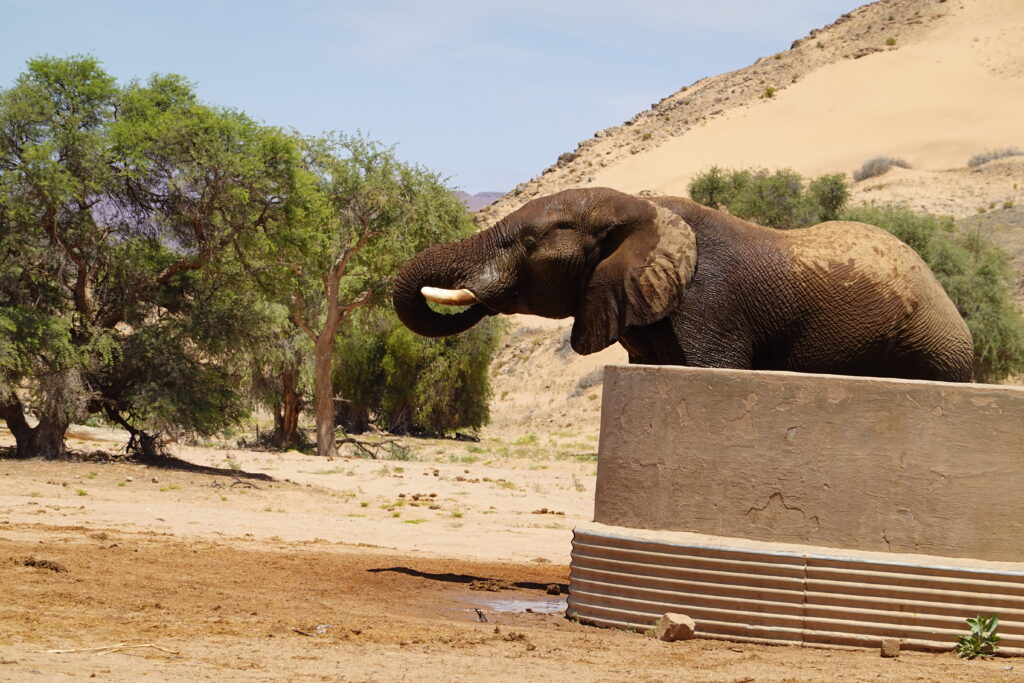
Food production and wildlife conservation cannot be treated separately.
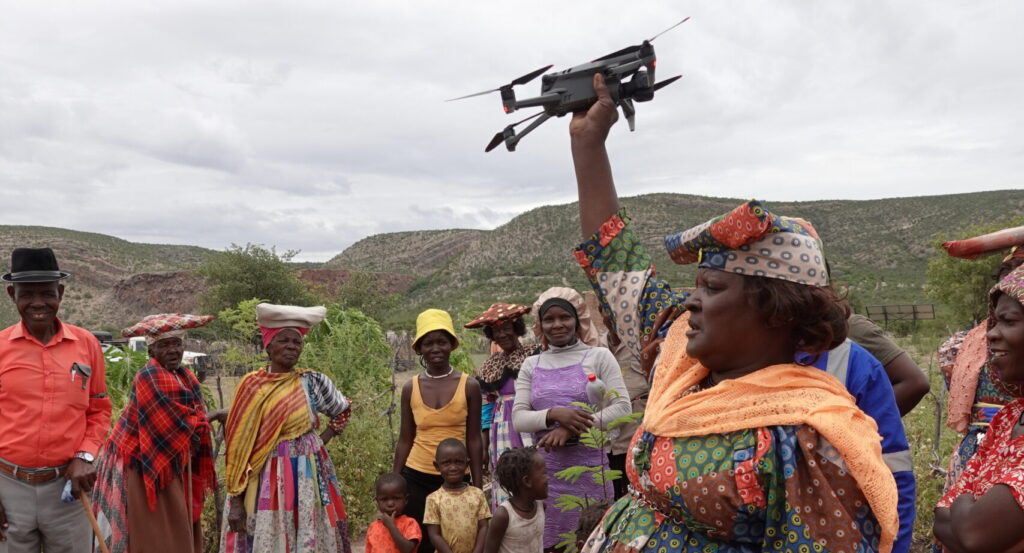
Where elephants and other wildlife share the landscape with communities, ReGen is testing practical approaches that can protect livelihoods while allowing wildlife to remain part of the landscape.
Market linkages
Food security is only part of the picture. Long-term resilience also depends on communities being able to create reliable value from what they produce.
ReGen is exploring how tourism can become a reliable market for locally produced food and other products, while keeping local food security at the centre.
Built through partnership
ReGen brings together people and organisations who see different parts of the picture — from tourism and agroforestry to conservation, communities and storytelling.
No single organisation has all the answers.
By bringing these perspectives together, ReGen can learn from what is happening on the ground and build a mechanism that reflects the realities of Namibia.
The Team
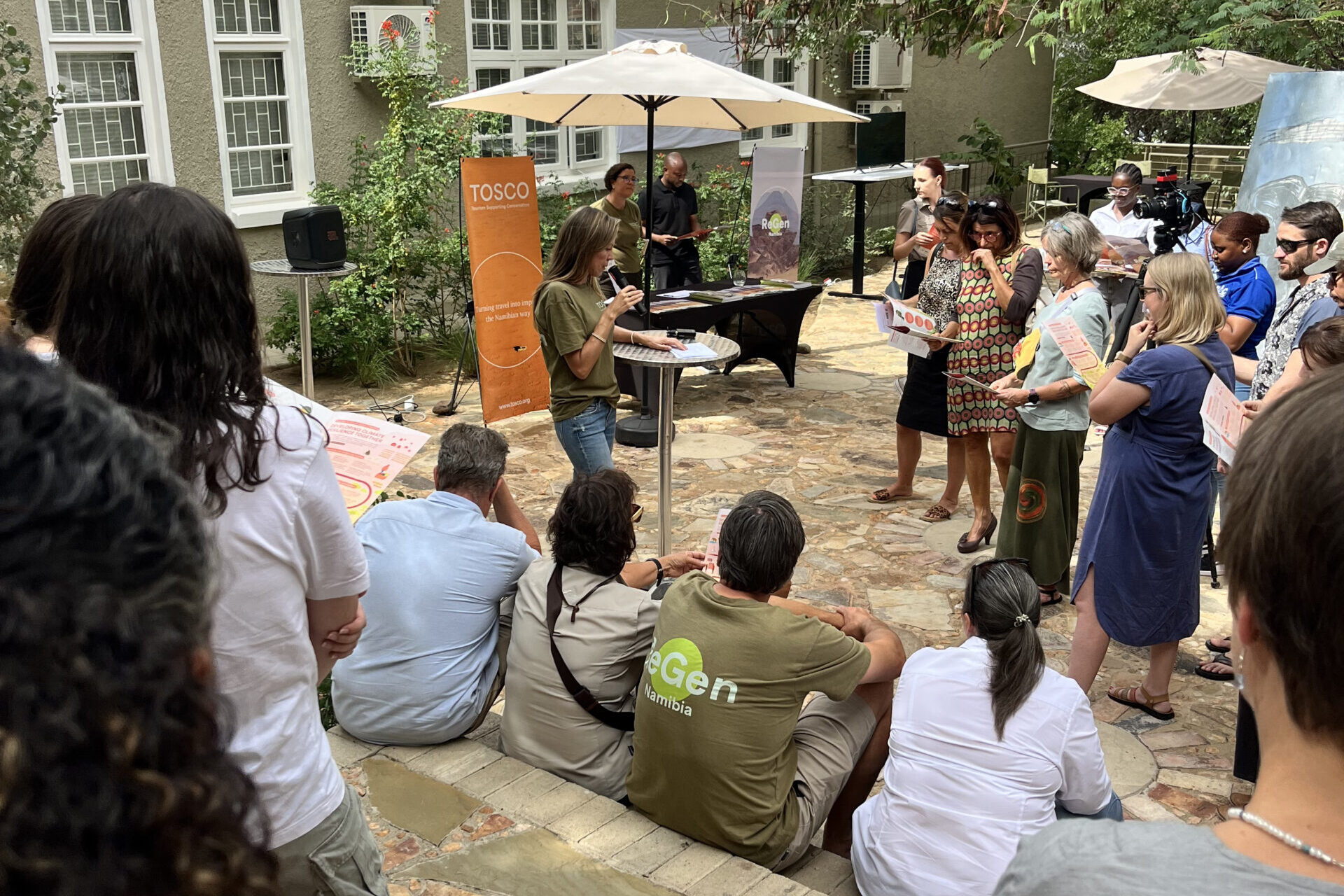
TOSCO provides the platform, governance and coordination for ReGen, bringing together the tourism industry, Field Partners and technical expertise, and coordinating the development of a financial mechanism for climate resilience.
Avara brings agroforestry, ecological and technical expertise to ReGen. Across the Phase 1 pilots, Avara supports pilot selection, implementation, training and capacity building, and monitoring and learning across sites, helping build a shared understanding of the most successful approaches.
Turipamwe represents Namibian designers driven by impact-led storytelling. They work alongside the ReGen team to develop the communication tools, stories and materials needed to explain the mechanism and its impact clearly and engage both businesses and guests.

Partners
ReGen works with Strategic Partners and Field Partners in tourism and conservation organisations across Namibia, bringing local knowledge, relationships and implementation capacity into the programme. Together, they help shape where investment can have the greatest value and test what works on the ground.


The vision
Towards a connected network of resilience
As we learn what works, successful approaches can be replicated, new communities can become involved, and stronger connections between tourism and local producers can emerge.
Over time, this could mean fresh produce reaching nearby lodges, community gardens becoming authentic visitor experiences, new nature-based enterprises developing, and investment extending into broader, landscape-scale resilience.
The ambition is for ReGen to grow into a connected network of action across Namibia — where knowledge travels, resources go further and what is learned in one place can help create change somewhere else.
This is how tourism can become part of a regenerative cycle: stronger communities and landscapes strengthen the tourism destination, while a stronger tourism industry creates greater capacity to invest back into its future.
ReGen is about unlocking the power of tourism to invest in its future — together.
Different places. Different people. One shared response.
REGEN PIONEER TOOLKIT
Everything you need to share the ReGen story.
The ReGen Pioneer Toolkit brings together simple, ready-to-use communication resources to help participating tourism businesses introduce ReGen to their guests and audiences.
From the Pioneer badge and guest information sheets to FAQs, photographs and adaptable messaging, the toolkit makes it easy to integrate ReGen into your existing communications.
Make it your own, share the story and help ReGen grow.
Frequently Asked Questions
For Tourism Businesses
How can our business become part of ReGen?
Tour operators, car rentals, accommodation providers, and other tourism-related businesses can explore opportunities to contribute.
ReGen brings together companies that want to help build a long-term model for investing in Namibia’s climate resilience.
Contact TOSCO to discuss participation and the available contribution arrangements.
What does it mean to be a founding contributor?
Founding contributors are the pioneering businesses helping establish ReGen.
Their commitments support the first initiatives while helping TOSCO and its partners develop a practical, transparent and sustainable model for future contributions.
How will ReGen finance this work?
ReGen is developing a new way to finance climate action and resilience. Conventional carbon credits focus on emissions. ReGen’s approach is intended to support broader outcomes for people and nature, including food and water security, healthy ecosystems and livelihoods. Ultimately, we want to arrive at a tourism contribution model through which every traveller understands clearly and concretely what their trip contributed. The aim is for a traveller to be able to say, for example: “By travelling to Namibia, I helped a farming family grow more of their own food and protect their fields from elephants.
How can we communicate our participation to guests?
Participating businesses can introduce ReGen through booking information, itineraries, websites and guest communications.
The most important message is that your business is helping invest in the resilience of the people and places that support tourism in Namibia.
Communication should accurately reflect your company’s contribution arrangement and avoid claims that a guest’s trip is carbon neutral or that specific impacts have been achieved without supporting evidence.
Contact TOSCO for guidance on approved contributor wording and communication materials.
For Travellers
What is ReGen Namibia?
ReGen Namibia is a climate action initiative led by TOSCO that brings tourism businesses, communities, and conservation partners together to strengthen Namibia’s resilience to climate change.
It helps tourism invest in practical, locally relevant solutions that support people, wildlife and healthy ecosystems.
Why does Namibia need ReGen?
Namibia contributes very little to global greenhouse gas emissions but is highly vulnerable to climate change.
Drought, water scarcity and changing rainfall patterns affect rural livelihoods, wildlife and the natural environments that make Namibia such a remarkable destination.
ReGen focuses on helping communities and ecosystems adapt to these challenges.
How is ReGen different from carbon offsetting?
Traditional carbon offsetting focuses on compensating for greenhouse gas emissions.
ReGen starts with a different question: what do people and nature in Namibia need to become more resilient to climate change?
This means investing in solutions such as water security, healthy soils, food production and biodiversity. Greater carbon storage can be a positive result of healthier ecosystems, but it isn’t the sole objective.
What projects does ReGen support?
ReGen’s first phase focuses on rural food and water security, particularly through regenerative agriculture and agroforestry.
These approaches work with natural processes to improve soil health, conserve water, support biodiversity and strengthen livelihoods.
The first pilot initiatives are helping ReGen test, learn and develop approaches that can be adapted to other communities and landscapes.
Does my trip contribute to ReGen?
If you are travelling with a participating tourism business, that business may support ReGen through an agreed financial contribution.
The way contributions are incorporated into bookings can differ between businesses. Your tour operator or accommodation provider can explain how they participate.
Is ReGen an additional tourist fee?
ReGen is not a government-mandated tourism levy.
Participating businesses may incorporate contributions into their travel pricing or support the initiative through other financial commitments.
Ask your travel provider whether a ReGen contribution is included in your booking.
How will I know that ReGen is making a difference?
ReGen is being developed through real projects and continuous learning.
The pilot initiatives are helping partners understand which approaches work, what they cost and how outcomes can be measured.
As the programme develops, ReGen aims to share documented progress, lessons and results from its work.
Can I visit a ReGen project?
ReGen is first and foremost about supporting local communities and ecosystems, rather than creating tourist attractions.
As the programme develops, opportunities for appropriate visitor experiences may emerge in partnership with local communities and tourism businesses.
Who is behind ReGen?
TOSCO coordinates ReGen, a Namibian organisation that connects the tourism industry with conservation and community development.
The programme brings together tourism businesses, local communities, conservation organisations and technical partners to develop solutions suited to Namibia’s realities.
BECOME A MEMBER
Join TOSCO
Your business has a role to play in protecting what makes Namibia extraordinary. From lodges and tour operators to car rentals and activity providers, and whether you are in or outside Namibia, we welcome all tourism businesses ready to make a difference. Want to support our mission as a corporate or organisation? Let’s talk.
CONNECT WITH US
Contact TOSCO
For enquiries, please send an email to:
Connect with us on social media to receive regular industry insights, news and project updates:
Community Conservation and Inspiration Hub
7 Rossini Street, Windhoek
DESIGNED BY JAM EN KAAS STUDIO
CONTACT TOSCO
Community Conservation and Inspiration Hub
7 Rossini Street, Windhoek
DESIGNED BY JAM EN KAAS STUDIO